
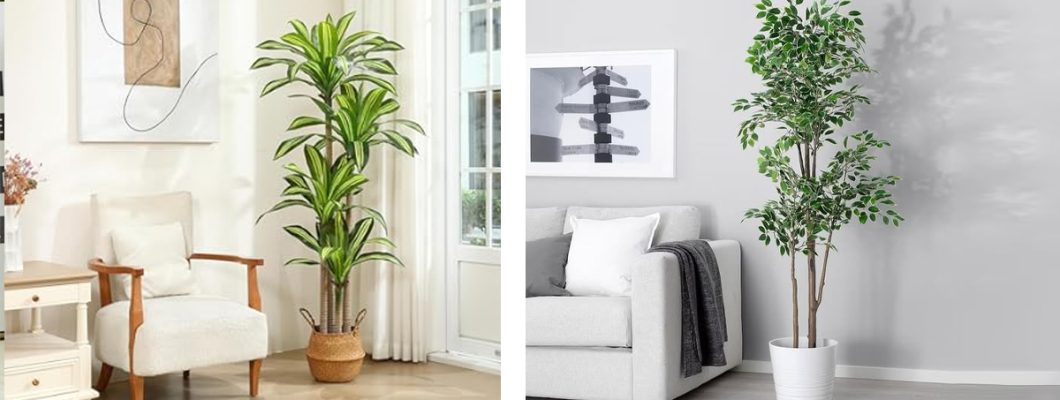
5 Common Mistakes When Using Artificial Plants in Decor (And How to Avoid Them Easily)
In modern interior design, artificial plants have become a favorite choice for many lovers of elegance and simplicity due to their flexibility and ease of use — not to mention that they don’t require watering or sunlight.
However, despite these advantages, many fall into common mistakes that make the final result less appealing or cause the plant to lose its natural appearance.
In this article, we’ll explore the 5 most common mistakes people make when using artificial plants in decor and offer practical tips to avoid them for the best styling results in your home or office.
Mistake #1: Choosing the wrong size for the space ?
One of the most frequent mistakes is placing a massive artificial plant in a small room or vice versa.
Many believe that shape alone matters, but visual balance plays a huge role in making the plant look beautiful without seeming overwhelming or out of place.
✔️ Solution:
If the space is small (like a desk corner or table), choose small to medium-sized artificial plants.
For large spaces such as a living room or entryway, go for a tall artificial tree like an olive tree or bamboo.
? Example from Bamboo Tree Store:
Our 210 cm artificial olive tree adds an elegant presence to large living room corners.
Mistake #2: Using a plant that doesn't match the room's style ?️
People often buy beautiful artificial plants without considering if they match the room’s design or function.
For example, placing a tropical plant (like an artificial cactus) in a classic-style room may seem inconsistent.
✔️ Solution:
Choose plants that match your décor style: bamboo suits calm, minimal styles; olive trees work with modern elegance; cactus fits industrial or contemporary looks.
Consider the function of the room:
Living room? A medium-sized tree with a decorative base.
Kitchen? A small plant like an artificial onion plant on a shelf.
Entryway? A tall, welcoming plant.
Mistake #3: Ignoring material quality and appearance ?
Some artificial plants clearly look fake, especially when made with poor materials or unrealistic colors — this ruins the room's natural vibe.
✔️ Solution:
Choose plants made of high-quality plastic, PE (polyethylene), or silk.
Look for detailed leaf veins and natural color gradients.
Avoid overly bright or shiny finishes.
? Tip from Bamboo Tree Store:
Our artificial cactus is made from soft, matte materials that ensure a 100% natural look.
Mistake #4: Neglecting the pot or base ?
Even if you pick a beautiful artificial plant, placing it in a cheap or undersized plastic pot can ruin the final look.
✔️ Solution:
Use a pot that fits the size and height of the plant.
Choose neutral or natural materials (ceramic, wood, terracotta).
Try adding stones or pebbles on the surface to hide the artificial base and enhance realism.
Mistake #5: Placing the plant in the wrong location ?
Another common mistake is placing artificial plants in dark or hidden corners.
The goal is to bring life and energy to the room — so placement matters!
✔️ Solution:
Place your plant near natural light or next to a large decor piece.
Use side lighting or spotlights to highlight the plant at night.
Experiment with different spots until you find the best visual effect.
Conclusion: How to make artificial plants look perfect?
The difference between a basic artificial plant and one that looks realistic and beautiful lies in smart choices, proper styling, and attention to small details.
Avoiding these 5 common mistakes is the first step toward creating a more elegant and authentic-looking space — without the hassle of maintaining real plants.
Whether you're decorating your lounge, coffee corner, or home office, remember that artificial plants can be just as valuable as real ones — when chosen and placed correctly.
? Related articles:
Leave a Comment